Download Archaeology and Capitalism: From Ethics to Politics - Yannis Hamilakis | ePub
Related searches:
The Protestant Ethic and the Spirit of Capitalism
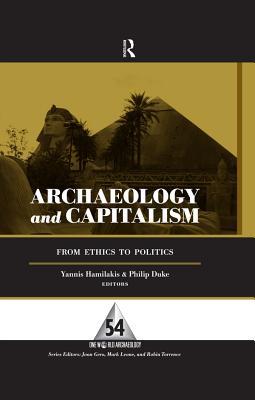
Archaeology and Capitalism: From Ethics to Politics
Feminist Theory: Definition and Discussion
Archeological ethics and cultural property: the debate of - DiVA
Examination of Archaeological Ethics and the Repatriation
Ethics, Objectivity, and Emancipatory Archaeology - DU Portfolio
Archaeology and Capitalist Realism – Colleen Morgan
4195 1479 2762 4032 4499 2018 488 3583 1242 499 1026 10 1237 4736 2019 1953
The protestant ethic and the spirit of capitalism is a discussion of weber’s various religious ideas and economics. Weber argues that puritan ethics and ideas influenced the development of capitalism. While weber was influenced by karl marx, he was not a marxist and even criticizes aspects of marxist theory in this book.
Dec 4, 2019 this is a speech i gave at a teach-out during the 2019 university and college union (ucu) uk industrial action.
“the tragedy is that so many people look for self-confidence and self-respect everywhere except within themselves, and so they fail in their search. ” dr nathaniel branden in all aspects of our lives we find ourselves evaluating our worth.
Max weber's the protestant ethic and the spirit of capitalism argues that protestant ethics promoted capitalism in the west. Winslow productions / getty images the protestant ethic and the spirit of capitalism is a book written by sociolo.
The three types of ethics include descriptive ethics, normative ethics and metaethics, explains lander university’s philosophy department. Each type has a the three types of ethics include descriptive ethics, normative ethics and metaethics.
Search the aspr tracie resource library and view tailored topic collections comprised of current healthcare system preparedness resources. A self-service collection of disaster medical, healthcare, and public health preparedness materials,.
The challenge of an emancipatory archaeology is especially profound as concerns study of the very recent, 20th-century past.
Learn more about ancient civilizations and human remains, such as buildings, art or trash. Advertisement learn more about ancient civilizations and human remains, such as buildings, art or trash.
Can archaeology have socially committed ethical principles at the same time that it strengthens its relationship with the market and capitalism? is this coincidence.
Matthews has offered a bold new interpretation of the archaeology of capitalism. This book will take historical archaeology in exciting new directions of inquiry.
W ɑː ˈ z iː /; french: ()) is a polysemous french term that can mean:� a sociologically defined social class, especially in contemporary times, referring to people with a certain cultural and financial capital belonging to the middle or upper middle class: the upper (haute), middle (moyenne), and petty (petite) bourgeoisie (which are collectively designated.
Yannis hamilakis is a greek archaeologist and writer who is the joukowsky family professor of archaeology and capitalism: from ethics to politics.
Through its committee on ethics, annual ethics bowl, and principles of archaeological ethics, saa is a leader in defining and practicing ethical conduct.
Jun 1, 2020 can capitalism have moral foundations? though this question may seem strange in today's world of vast economic disparities and widespread.
It is clear that archaeology and anthropology are central to the cultural development of the advanced capitalist nation states of the nineteenth century.
Ethics is the branch of philosophy that deals with morality and how it shapes behavior. Different branches of the study of ethics look at where our views of morality come from and how they shape our everyday lives.
Oct 4, 2018 the future of capitalism is a passionate and polemical book, in which celebrated economist paul collier outlines brilliantly original and ethical.
Communicating across the subfields, the journal features papers in a wide variety of areas, including social, cultural, and physical anthropology as well as ethnology and ethnohistory, archaeology and prehistory, folklore, and linguistics.
The history of archaeology - the history of archaeology dates back to the 15th and 16th century with the rise in popularity of humanism.
Post Your Comments: