Read Online Women and Monastic Buddhism in Early South Asia: Rediscovering the Invisible Believers - Garima Kaushik | PDF
Related searches:
Attitudes toward Women and the Feminine in Early Buddhism
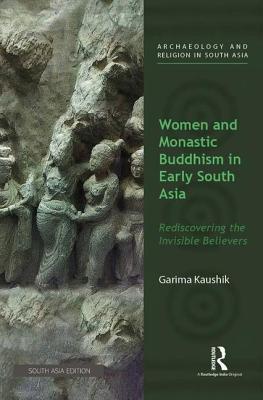
Women and Monastic Buddhism in Early South Asia: Rediscovering the Invisible Believers
Views on Women – Buddhism and the World
The Buddha's Opinions on Women and Nuns
The first Women's March was led by the Buddha's aunt in 600 BC
Women in American Buddhism The Pluralism Project
Women and monastic Buddhism in early South Asia
Women and Monastic Buddhism in Early South Asia eBook by
Women In Buddhism - The Spiritual Life
The Place of Women in Buddhism - Alliance for Bhikkhunis
The Role Of Women In Buddhism - Buddhism Zone
The First Free Women: Poems of the Early Buddhist Nuns: Weingast
Women in Buddhism: Questions and Answers - BuddhaNet
Interview with the Dalai Lama about the Full Ordination of Women
The Changing Status of Women in Monastic Life - SIT Digital
Thailand's female rebel monks - The Week
Moms in the monkhood: Top female monk hacked the system
The Position of Women in Buddhism
A Buddhist Literary Scandal; the Curious Case of 'The First Free
Gender and Religion: Gender and Buddhism Encyclopedia.com
Monks and Nuns
(PDF) The economic power of women in early South Asian Buddhism
4063 1821 2270 1622 4338 1659 2998 4344 3307 1387 3676 4776 1455 3664 3998 3527 2881 461 289 1599 2337 4481 3154 4496 776 1790 4073 2141 1103 963 1519 2104
After reading this article, “attitudes toward women and the feminine in early buddhism” by alan sponberg, i understand that the attitude toward women in the early buddhism was deeply ambivalent. The buddha himself belief that women are able to attain enlightenment, become an arhats, and liberated from the suffering.
Until recently, the lineages of female monastics only remained in mahayana buddhism and thus are prevalent in countries such as china, korea, taiwan and vietnam but a few women have taken the full monastic vows in the theravada and vajrayana schools over the last decade. From conservative perspectives, none of the contemporary bhikkuni.
Bhikkhunis were not the only women who were important in the early years of buddhism. Lay women were also important in the early vitality of the sect. Many women who were converted to buddhism did not join the order of bhikkhunis. Quite a number of these women gained some level of enlightenment, and a few even became arhats.
Women and monastic buddhism in early south asia� rediscovering the invisible believers. [garima kaushik] -- this book uses gender as a framework to offer unique insights into the socio-cultural foundations of buddhism.
But first, in order to explore the relevance of feminism to the everyday lives of buddhist nuns and monks, it is necessary to give some background about kinnaur,.
Through examining these different aspects of women in early buddhism, an impression is gained of women being taken seriously as buddhist practitioners in their own right. True, sometimes it seems they have to assert their position, writing their own stories to balance up the men’s, as in the pāli apādanas.
After the attainment of the enlightenment in bodhgaya and preaching first.
The buddha saw the spiritual potential of both men and women and founded after considerable hesitation the order of bhikkhunis or nuns, one of the earliest organizations for women. The sasana or church consisted of the bhikkhus (monks), bhikkhunis (nuns), laymen and laywomen so that the women were not left out of any sphere of religious activity.
We find in the early buddhist texts is not a single, uncertain voice, but rather tragedy, the buddha replied: “monks, among these [victims], some women.
Jun 17, 2013 dhammananda was the first thai woman in centuries to be ordained as a theravada buddhist monk.
However monastic lineages for women did continue in most mahayana traditions and orders of nuns have persisted to the present primarily in japan, korea, and taiwan. In the 1980s a worldwide buddhist women’s movement, the international association of buddhist women, began bringing buddhist women from both east and west together.
Buddhist nuns in descriptions of buddhism and buddhists, monks have figured prominently and a wealth of detailed information is available on their way of life.
The founder of buddhism, gautama buddha, permitted women to join his monastic community and fully participate in it, although there were certain provisos or garudhammas. As susan murcott comments, “the nun’s sangha was a radical experiment for its time.
Surveys mahayana and indian buddhist texts to conclude that, although early indian buddhism did not discriminate against women on spiritual grounds, early mahayana texts denied women buddhahood, a discrimination further developed in pure land sutras and sutras in which women changed sex in order to gain buddhahood.
In 2015, ajahn candasirī established a nuns' hermitage, milntuim, near perth in scotland which is her main residence.
Jan 8, 2021 the religious center, located on a hillside away from densely populated areas, may have had all-female or mixed-gender renunciates.
Jul 6, 2016 there are roughly 300,000 monks in thailand, home to one of the highest concentrations of buddhists on the planet.
Once the order of bhikkhunis was founded a large number of distinguished women from various social backgrounds came to adorn this order, attracted by the power of the buddha’s teaching and the freedom which the new order offered them. Many of these bhikkhunis attained to the supreme bliss of enlightenment.
Jan 21, 2021 a great historical collection of early buddhist women's poems. Represented the diverse voices of 73 different renunicant monastic women.
Buddhism has attracted many followers from different cultural and socioeconomic backgrounds. Yet, despite the religion’s global appeal, the role of women in buddhism has been a subject of public debate. Even though female buddhists played important duties as nuns and motherly figures, buddhist teachings have undermined women’s access to religious spaces and roles.
In america, several co-ed monastic orders have sprung up in which men and women take the same vows and live under the same rules. And whatever his intentions, the buddha was certainly wrong about one thing - his prediction about the survival of the teachings.
The historical buddha and the first nuns let's begin at the beginning, with the historical buddha. According to the pali vinaya and other early scriptures, the buddha originally refused to ordain women as nuns. He said that allowing women into the sangha would cause his teachings to survive only half as long –- 500 years instead of a 1,000.
Oct 21, 2019 the monastery is currently thailand's only all-female temple. Varanggana vanavichayen, the first woman to be ordained as a monk on thai soil,.
(epa/rungroj yongrit) the venerable dhammananda — modern thailand's first female theravada buddhist monk.
Literacy and the education of bhikkhunis in early chinese buddhism. Soun sunim noblewomen and monks: lay-monastic relations in the early joseon.
Nov 25, 2019 nowhere is the subordination of women more evident than in the buddhist sangha, the monastic community.
Read women and monastic buddhism in early south asia rediscovering the invisible believers by garima kaushik available from rakuten kobo. This book uses gender as a framework to offer unique insights into the socio-cultural foundations of buddhism.
In fact the buddha’s and his early disciples’ promotion of women’s practice seems to have been wildly successful in early buddhism� the record of king ashoka, the 3rd century bce emperor of much of india and great exponent and supporter of buddhism, gives us a unique snapshot of the state of buddhism in india two centuries after the buddha, through his edicts issued as stone inscriptions.
A monastery is a community of men or women (monks or nuns), who have chosen buddhism, the first indian religion to require large communal and monastic.
Early in buddhism, the buddha did not allow women to join or fully participate in his monastic community. As like other religion and time periods, rights and equality for women evolves over time. As well all know the main goal for any buddhist is to reach enlightenment.
Buddha emphasized the parity of men and women in early buddhism by giving permission to women to gain access into the sangha. Women from loyal families, trustworthy housewives, and prostitutes all got shelter in buddhism and got equal right to practice dhamma. [1] from that time women started to lead their life with their own personality.
This article serves as a contribution to the financial primacy of buddhist women in early historic south asia. Presented here is a single case study from the first century bce monastic stūpa site.
The role of women in buddhism is the subject of much debate and discussion in modern literature. Many people claim that buddhism is gender biased, with women side-lined. This bias, if it exists, has happened despite buddha’s insistence that men and women are equal.
She became the first ordained buddhist nun and led her 500 followers and other women as a spiritual.
In the earliest days of buddhism, there was no organized monastic community, only the followers of the buddha. It is not known exactly when the practice of ordaining women stopped, but it may have been related to the difficulties associated with travel and accommodation under hazardous conditions. By the time of the first council, the monastic community ( sangha) became more structured and certain rituals and rules were established for the sangha.
Monasticism - monasticism - buddhism: the generic term for the buddhist as early as the 4th century ce, china produced pure land buddhism, whose a number of anglican religious communities for men and women were founded.
Through buddhist history, in communities of celibate buddhist men and women there were two ideal modes of behavior, reflecting the origins and historical developments preserved in the buddha's story. The two are eremitic asceticism, likely taken from the earliest years of the order, and cenobitic community life, in which monks and nuns are engaged with monastic brethren and lay society.
But some people also believed that buddhist monastic life would be the best way female novices customarily sit in the last row during ordination ceremonies.
Post Your Comments: