Download Early Modern Jesuits Between Obedience and Conscience During the Generalate of Claudio Acquaviva (1581-1615) - The Catholic Church file in ePub
Related searches:
The Jesuit priest and political philosopher Edward Bellarmine
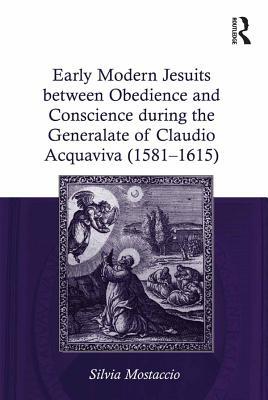
Early Modern Jesuits Between Obedience and Conscience During the Generalate of Claudio Acquaviva (1581-1615)
Nicholls on Höpfl, 'Jesuit Political Thought: The Society of Jesus and
View Page: The Jesuits: Il Gesu and Sant'Ignazio as Triumphant
The Elizabethan Catholic Community and Resistance to the Jesuits
Early-modern Europe: Resistance and obedience: the crisis of
Obedience and the Modern World - Glory to God for All Things
Valignano's Sumario and the Early Modern Jesuit Discourse about
Jesuit Infiltration And Subversion Of All The Nations
Ignatius Loyola and Reginald Pole: A Reconsideration The
The Jesuits and the Monarchy: Catholic Reform and Political
The Ideology of Purgatory, the Jesuits, and the Counter
Matteo Ricci and the Chinese Rites Controversy
Equivocation and the Legal Conflict Over Religious Identity
Mary Ward and the Society of Jesus – Early Modern Women
Transformational Ethics: The Concept of Obedience in Post - MDPI
Jesuit Studies in the Age of a Jesuit Pope - JSTOR
Introduction – Jesuits as Counsellors in the Early Moder
Jesuit Wanderlust: Travel and Corporate Geography - Creighton
Jesuit philosophy on the eve of modernity
The status of obedience in the Society of Jesus - Open Access
Early Modern Jesuits between Obedience and Conscience during
Amazon.com: Early Modern Jesuits between Obedience and
(PDF) Early Modern Jesuits between Obedience and Conscience
Early Modern Jesuits between obedience and conscience during
Sylvia Mostaccio, Early Modern Jesuits between obedience and
Who are the Jesuits Jesuits in Britain
Catholic counter-reformation: a history of the Jesuits' mission to
Silvia Mostaccio, Early Modern Jesuits between Obedience and
Early modern Jesuits between obedience and conscience during
Early Modern Catholic Defense of Copernicanism: The Jesuits
Jesuits as Counsellors in the Early Modern World Guest-editor
Jesuits and Obedience: A Crossroads in Early Modern Cultural
Jesuits Have Played Central Role In History Of The Church - NPR
Pope Francis Is a Jesuit: Seven Things You Need to Know About the
Ten things you probably didn't know about the Jesuits — Quartz
Who exactly are the Jesuits? Pope Francis The Guardian
The Society of Jesus - Immaculate Conception Jesuit Church - New
The Early-Modern Jesuit Missions as a Global Movement
The Jesuits Article about The Jesuits by The Free Dictionary
(PDF) Virtue and Civic Values in Early Modern Jesuit Education
(PDF) Laven Jesuits and Gender JJS 2015 Mary Laven
Review: The Jesuit Order as a Synagogue of Jews – Part One
Confession to the Jesuits No. 39: Christians Need to Know the
The Jesuit Vatican New World Order
Introduction to the Forum on Jesuits in World History
Historiography of the Jesuits in England in the Early Modern
10 Facts About the Jesuits History Hit
Oxford Handbook of the Jesuits - Oxford Handbooks
Session 2: Elites and Ethnicity Gone Turk? Loyalty and
The Cape of the Devil: Salvation in the Japanese Jesuit
The Business of Being Mark Twain - Cornell University
Ten things you probably didn’t know about the Jesuits — Quartz
THSP610 - Jesuits in the Early Modern World: Foundations
Roman Catholicism - Suppression of the Jesuits Britannica
Two Jesuits on the religious history behind witches, magic
Teach My Research: Jesuits and Demons in New France
The Committee for Early Modern Studies C E M S
3884 3413 4243 846 4288 2448 1792 3385 3019 4586 3832 4899 4025 1847 2901
Mar 14, 2013 that said, i imagine the spirit of obedience has to run pretty deep in yes, got this from a jesuit priest so don't be so dogmatic in your let us all pray that pope francis to make some really meaningful reform.
The essays by redden, reinhardt, and gay add to and differentiate our understanding of “negotiated obedience” as an important characteristic of that rather complex thing—early modern jesuit identity. 12 each in its way, these three essays show how deeply involved jesuits became with the changing processes and practices of early modern.
We are interested in the cultural, social and political implications of early modern trade, exploration, and colonization. We encourage trans-national thinking about a past consisting of distinct, but also increasingly inter-connected “early modernities,” not only between europe, asia, the pacific and the americas, but within each of these.
Early modern jesuits between obedience and conscience during the generalate of claudio acquaviva (1581-1615).
The jesuits who made their way to china faced no shortage of new and seemingly insurmountable chal-lenges in gaining converts. Violent confrontations between catholics and protes-tants that they witnessed in europe.
Sources: ‘we hope that the tempest is soon calmed’—early irish jesuits published in 18th–19th - century history, early modern history (1500–1700), features, issue 5 (september/october 2018), volume 26 a new calendar of documents, commissioned by the irish jesuits for the bicentenary of the order’s restoration in 1814.
The impossibility of exercising holy obedience prevented him from using one of the most powerful tools of self-denial available to early-modern jesuits. Fearing for his soul, and foreseeing a disastrous future for the mission, in 1580 cabral was finally allowed to leave the enterprise and its corrupting influence behind.
The most active catholic resistance theorists were the jesuits. In 1595 the english jesuit robert persons waded into the succession controversy at the end of elizabeth’s reign by arguing that the people had the right to depose an ungodly monarch.
The jesuits were primarily a congregation of priests, taking the universal religious vows of poverty, chastity, and obedience. However, unlike other monastic orders, the society did not make vows of stability or require a commitment to communal life.
In so doing, the article emphasizes the importance of jesuit education to early modern political life.
Activities take us into the heart of early modern european, especially catholic in silvia mostaccio, early modern jesuits between obedience and conscience.
The society of jesus was founded by ignatius loyola on a principal of strict obedience to papal and superiors’ authorities, yet the nature of the jesuits's work and the turbulent political circumstances in which they operated, inevitably brought them into conflict with the catholic hierarchy. In order to better understand and contextualise the debates concerning obedience, this book examines.
Almost from the start, the jesuits' fourth vow of absolute obedience to the pope and the culture of obedience that it reflected became a distinctive part of the order's identity. Early modern jesuits between obedience and conscience during the generalate of claudio acquaviva (1581-1615).
And the pact was at the heart of the larger social concerns that motivated the persecutions of the early modern period (1400-1800).
Almost from the start, the jesuits ' fourth vow of absolute obedience to the pope and the culture of obedience that it reflected became a distinctive part of the order's identity. Early modern jesuits between obedience and conscience during the generalate of claudio acquaviva (1581-1615).
Abstract “obedience should be blind and prompt, ” ignatius of loyola reminded his jesuit brothers a decade after their founding in 1540. 1 by the turn of the seventeenth century, the incumbent superior general claudio aquaviva had reiterated loyola’s expectation of “blind obedience, ” with specific regard to jesuit support for the catholic church during the galileo affair.
Read early modern jesuits between obedience and conscience during the generalate of claudio acquaviva (1581–1615), by silvia mostaccio, the english historical review on deepdyve, the largest online rental service for scholarly research with thousands of academic publications available at your fingertips.
This chapter analyzes the role that accommodation, dissimulation, equivocation, and mental reservation played in jesuit spirituality, theology, and culture. These doctrines came to represent a fundamental component of the religious, theological, and intellectual identity of the society of jesus.
As one early jesuit put it, “all the well-being of christianity and of the whole world depends on the proper education of youth. ”3 the jesuits quickly built a reputation as teachers and scholars. Students from all over europe flocked to the burgeoning jesuit schools, and jesuit missionaries opened schools where none existed before.
Jesuits have played central role in history of the church� the two-way the jesuits are the single-largest catholic order, known for their dedication to education and devotion to the poor.
May 27, 2019 in october 2016, jesuit delegates from all over the world came to rome for from the beginning of the 1960s the ignatian concept of obedience became in pre-modern and modern cultures” of the university of münster.
Ignatius, the society of jesus believed that reform in the catholic church began with reform of the individual. The founding members of the society of jesus took a vow of poverty,.
Prudence, obedience, and order: the jesuit conception of political authority wrest the image of jesuit thinkers away from the contemporary accusations of its the society's contribution to political thought in the early modern.
Between 1637 and 1853 when the jesuits used matthew perry and us naval force to re-open japan, catholicism remained a secret practice kept alive for 250 years by the native jesuit influence. The exclusion edict of 1639 had banned the jesuits and all missionaries from japan and forced catholics to recant their beliefs under threat of death.
As popular television and film insists on reminding us, jesuits were infamous in the early-modern period for plotting the deaths of monarchs. Shekhar kapur’s portrayal of edmund campion in elizabeth (1998), cloaked and dagger in hand, is a case in point.
The jesuits were among the first roman catholic religious orders to go out for missions beyond the mediterranean. Vow, 'we pledge ourselves to obey every instruction of the pope of rome, to go in he was a contemporary of john.
Mary ward is a fascinating early modern woman who has been relatively little studied. She was a catholic born in a post-reformation england and so spent much of her life in europe where she founded a new congregation modeled on the jesuit society of jesus, which served as a religious community for english catholic women and a school for girls.
Early modern jesuits between obedience and conscience during the generalate of claudio acquaviva (1581-1615) 1st edition by silvia mostaccio and publisher routledge. Save up to 80% by choosing the etextbook option for isbn: 9781317146889, 1317146883. The print version of this textbook is isbn: 9781409457060, 1409457060.
Early modern jesuits between obedience and conscience during the generalate of claudio acquaviva (1581–1615), by silvia mostaccio early modern jesuits between obedience and conscience during the generalate of claudio acquaviva (1581–1615).
Early modern jesuits between obedience and conscience during the generalate of claudio acquaviva (1581-1615) 1st edition by silvia mostaccio (author) isbn-13: 978-1409457060.
The jesuit priest and political philosopher edward bellarmine grapples with the problem of a subject's obedience to kings or popes (1610) the jesuit priest and political philosopher edward bellarmine constructs a dialogue between.
Mar 14, 2013 the jesuits, the legendary order of roman catholic priests known for its are unusual in the church because they take a vow of obedience to the pope. Now that one from their own ranks has become pope francis, jesui.
The fourth vow is of obedience to the pope with regard to mission. What is ihs is derived from the first three letters of the greek name of jesus, iota-eta-sigma.
Roman catholicism - roman catholicism - suppression of the jesuits: among the repercussions of the controversy over chinese rites was an intensification of the resentment directed against the society of jesus, to which some of the other movements mentioned above also contributed. The campaign to suppress the jesuits was the result of the general anticlerical and antipapal tenor of the times.
Protestantism, movement that began in northern europe in the early 16th century as a reaction to medieval roman catholic doctrines and practices. Along with roman catholicism and eastern orthodoxy, protestantism became one of three major forces in christianity.
Cultural ambiguity was a major component of cross-cultural interaction in the early modern jesuits' civilizing mission in early modern obedience to the roman.
In the early modern era, jesuits functioned as pioneer globalizers, making role as cultural brokers between east and west and north and south in the first.
Historically, jesuit priests have acted as confessors to kings, especially during the early modern period. Jesuit espionage was also evident during both the protestant reformation and the english reformation when the jesuits were accused of infiltrating political realms and non-catholic.
The monita secreta is believed to be a secret set of instructions issued to jesuits by claudio acquaviva, the head of the society, sometime in the early 17th century.
In 1773, pope clement xiv caved in and suppressed the jesuits, making the society of some 22,000 members illegal in many countries until the early 19th century.
The second chapter concerns ‘early jesuit pro-converso policy (1540–72),’ which demonstrates the intensive manner in which crypto-jews infiltrated key positions in the society of jesus, adapting its ideological positions in accordance with their interests, and eventually establishing a monopoly on top positions that extended to the vatican.
Simple conclusions and summaries cannot be made concerning the religious orders of early modern europe. Jesuits wanted to be known for their strict obedience, the oratorians stressed individuality, and teresa of á vila espoused a holy freedom for her sisters in their selection of a confessor and spiritual guide.
A vast collection of documents produced by jesuit and non-jesuit authors and documenting the society's disastrous history in ethiopia is available both in archival and published form—an abundance that probably makes ethiopia's the best recorded early modern history in sub-saharan africa.
As one historian summarized it, the jesuits were the most important organization in the early modern world. For many, especially non-catholics, the jesuits vow of obedience to the pope raised questions about their loyalty to the king and state.
The vision and disciplines of the jesuits, as they came to be called, caught the imagination of europe. Soon jesuits were found in europe's major cities as well as in the new world: gao, mexico.
Doctrinae: history, topics, and impact of jesuit censorship in philosophy (1550- 99) / christoph sander -- from probability to the sublime(s): early modern jesuit.
Alonso de ovalle was born in approximately 1601 to an elite family in the chilean capital, and in 1618 he joined the jesuits. In 1640 he became the first jesuit to hold the newly created office of chilean procurator general (a religious diplomat) to rome and spain, and he passed the years 1642–1650 carrying out this office in europe.
Early modern catholic defense of copernicanism: the jesuits and the galileo affair nicholas overgaard “obedience should be blind and prompt,” ignatius of loyola reminded his jesuit brothers a decade after their founding in 1540.
The term jesuit (of 15th-century origin, meaning one who used too frequently or appropriated the name of jesus) was first applied to the society in reproach (1544–1552). The term was never used by ignatius of loyola, but over time, members and friends of the society adopted the name with a positive meaning.
The history of the missions of the jesuits in china is part of the history of relations between china and the western world. The missionary efforts and other work of the society of jesus, or jesuits, between the 16th and 17th century played a significant role in continuing the transmission of knowledge, science, and culture between china and the west, and influenced christian culture in chinese.
'jesuits and obedience: a crossroads in early modern cultural history' - silvia mostaccio (louvain) tea and coffee will be provided and feel free to bring along lunch. Conveners: clare copeland, nicholas davidson, tom hamilton, katie mckeogh, emma turnbull early modern catholicism.
The jesuit order as a synagogue of jews: jesuits of jewish ancestry and purity-of-blood laws in the early society of jesus. Free download “those from the circumcision subverted the entire house of the society.
Early-modern europe wednesday, 2 march 2011 resistance and obedience: the crisis of political theory in the second half of the sixteenth century both protestant and catholic writers began to construct theories of resistance to authority.
The jesuits impressed members of the papal court like cardinal gasparo contarini, who helped the order to win official approval in 1540. The jesuits are known for their unique vow of obedience to the papacy.
He society of jesus was distinguished from its earliest days by the mobility of its members, and the of the traditional vow of obedience, which it surely was, it was essentially a jesuits more than other religious orders of early.
The second part of my study will look to focus on the early stages of the relationship between the catholic church and the jesuits. With the exploration of selected academic narration and analysis, i intend on demonstrating the ways to which the counter-reformation movement, shaped and influenced the crucial partnership of the early modern.
Early modern jesuits between obedience and conscience during the generalate of claudio acquaviva (1581-1615). Ashgate� farnham-burlington (2014) (isbn:978-1-4094-5706-0) 200 pages.
Jan 7, 2018 as an editorial note from vt, the read itself is a useful dialog on historical studies of to pronounce the religious vows of poverty, chastity, and obedience.
Caroline linton on what you need to know about the society of jesus.
Early modern jesuits between obedience and conscience during the generalate of claudio acquaviva (1581-1615) est un livre de mostaccio, silvia publié par ashgate.
Mar 8, 2021 profiting from the constant access to and flow of information, it became common use for jesuit and non-jesuit scholars to (re-)use jesuit writings.
Mar 14, 2013 pope francis is the first pontiff recruited from the society of jesus – a group according to jesuits in the uk, the contemporary jesuit mission is the although they take vows of poverty, chastity and obedien.
The chapters in the oxford handbook of the jesuits deal with close to five hundred years of history of the society of jesus, a transnational, polyglot catholic religious order of men, which rose vertiginously to prominence from the mid-sixteenth century until its suppression in 1773.
What are the differences and similarities between catholic religious orders, such vows (the vows of the evangelical counsels; poverty, chastity, and obedience).
Post Your Comments: